The Great Migration is the largest terrestrial wildlife migration on Earth, and one of the most awe-inspiring natural events you can witness. Each year, approximately 1.5 million wildebeest, along with 200,000 zebras and 500,000 gazelles, embark on a continuous circular journey through the Serengeti-Mara ecosystem, covering roughly 1,000 kilometers across Tanzania and Kenya. Driven by ancient instincts and the search for fresh grazing and water, these animals face predators, treacherous river crossings, and the relentless rhythm of the African seasons. Experiencing this spectacle in person is something that stays with you forever.
What Is the Great Migration?
The Great Migration is not a single event but a year-round cycle of movement. The herds follow the rains, moving clockwise through the Serengeti ecosystem in response to rainfall patterns and the growth of fresh grass. Unlike many other migrations, there is no single starting or ending point — it is an endless loop that has been occurring for millions of years. The sheer scale is staggering: the column of animals can stretch for 40 kilometers, and the thundering sound of hooves and grunting fills the air as far as the eye can see.
The migration is driven primarily by the wildebeest, whose numbers dominate the movement. Zebras follow alongside, their digestive systems adapted to process the taller, coarser grass that the wildebeest leave behind, while gazelles prefer the shorter, more tender shoots exposed by the larger herbivores. This interdependence creates a complex ecological dance that sustains the entire ecosystem, supporting predators from lions and hyenas to crocodiles and vultures.
The Four Phases of the Migration
The migration can be understood through four distinct phases, each offering different wildlife viewing opportunities and occurring in different parts of the Serengeti ecosystem.
Phase 1: The Calving Season (January - March)
The southern Serengeti plains and Ndutu region come alive from late January through March as the herds settle on the short-grass plains for the calving season. This is one of the most dramatic periods of the migration — approximately 8,000 wildebeest are born each day during peak calving, creating a carpet of newborn life across the plains. The strategy is safety in numbers: with so many vulnerable young born simultaneously, predators cannot possibly take them all. Lion prides, cheetahs, hyenas, and wild dogs gather in large numbers to take advantage of the abundance, making this an exceptional time for predator-prey interactions. The Ndutu area and southern Serengeti are the prime viewing locations during this phase.
Phase 2: The Grumeti River Crossings (June - July)
As the dry season takes hold, the herds begin moving northwest toward the Grumeti River, arriving around June and July. The Grumeti River is the first major water obstacle the migration encounters, and the crossings here are dramatic events. Nile crocodiles — some over five meters long — lie in wait for the herds to enter the water. The animals gather on the banks, hesitant and nervous, before finally plunging in en masse in a chaotic, churning spectacle. Unlike the more famous Mara River crossings, the Grumeti crossings are typically less crowded with tourists, offering a more intimate viewing experience. The Grumeti area, including the Western Corridor of the Serengeti, is the best location for witnessing these crossings.
Phase 3: The Mara River Crossings (August - October)
The Mara River crossings are the most iconic and dramatic event of the entire migration. As the herds move north toward the Maasai Mara in Kenya, they must cross the Mara River — a wide, fast-flowing waterway lined with steep banks and patrolled by enormous crocodiles. The crossings are chaotic, dangerous, and profoundly moving. Animals crowd the riverbanks, sometimes for days, before the courage to cross builds. When they finally do, the scene is one of desperation and survival — thousands of wildebeest leaping into the churning water, some swept away by the current, others targeted by waiting crocodiles, and many making it to the other side to continue their journey. The Mara River crossings typically occur from August to October, with the timing varying each year based on rainfall patterns. The northern Serengeti and the Maasai Mara are the prime viewing areas.
Phase 4: The Return South (November - December)
By November, the short rains begin to fall on the southern Serengeti, and the herds begin their return journey southward. The movement is less concentrated during this phase, with the animals spreading out across the central Serengeti as they make their way back to the short-grass plains for the next calving season. This is often considered the quietest phase of the migration, but it offers its own rewards — fewer tourists, lush green landscapes, dramatic storm clouds, and excellent birdwatching as migratory birds arrive. The central Serengeti, including the Seronera area, is the best region for viewing during this period.
Best Time to See Each Phase
- January - March: Calving season in the southern Serengeti and Ndutu. Best for predator action and newborn wildebeest.
- April - May: The herds move northwest through the central Serengeti. Fewer tourists and dramatic landscapes.
- June - July: Grumeti River crossings in the Western Corridor. Excellent for dramatic river crossing photography.
- August - October: Mara River crossings in the northern Serengeti and Maasai Mara. The most iconic migration experience.
- November - December: The return south through the central Serengeti. Lush green scenery and fewer visitors.
Where to Stay During the Migration
Where you stay depends on the time of year and which phase of the migration you want to witness. During the calving season (January-March), mobile camps in the Ndutu area and southern Serengeti place you in the heart of the action. For the Grumeti crossings (June-July), lodges and camps along the Western Corridor offer prime access. The Mara River crossings (August-October) are best experienced from camps in the northern Serengeti or the Maasai Mara in Kenya. Many safari operators offer mobile camps that follow the migration, ensuring you're always in the optimal location regardless of when you visit.
Tips for Your Migration Safari
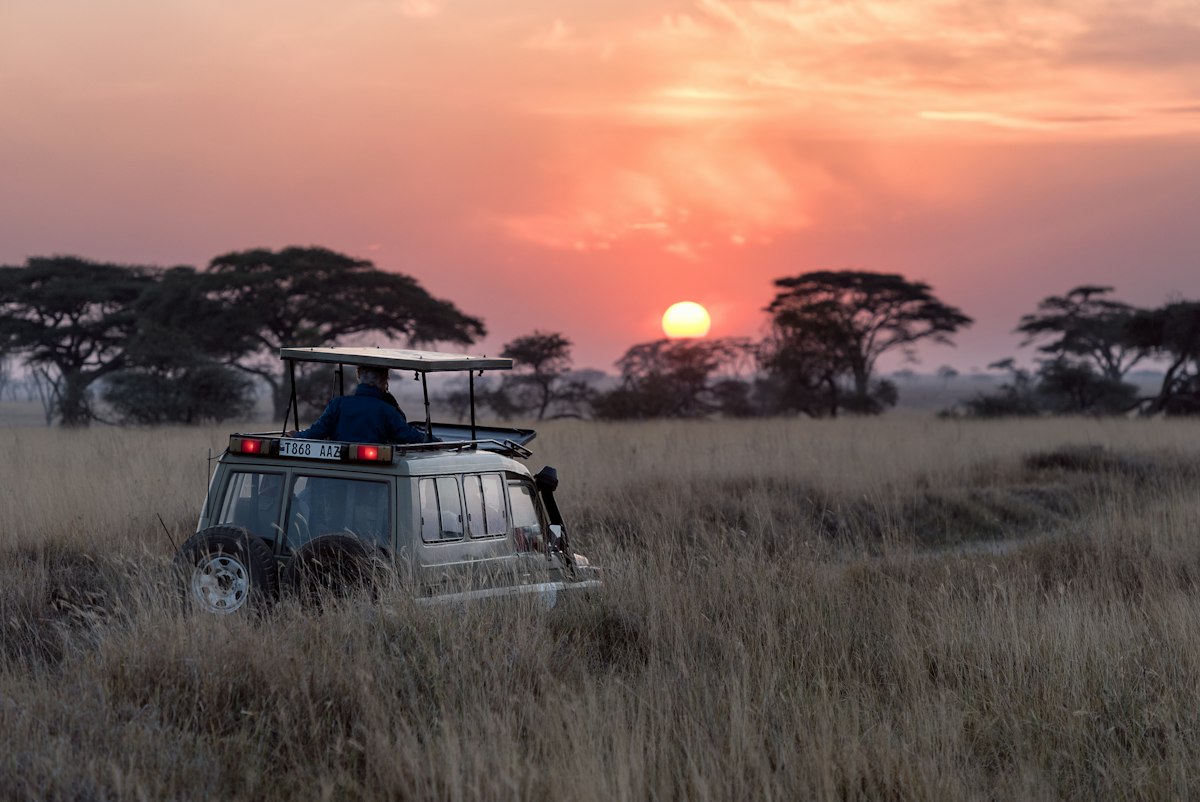
Book well in advance — the best camps and lodges fill up months ahead of peak migration periods. Choose a safari operator with expert guides who understand migration patterns and can position you for the best viewing. Be flexible: the migration is a natural event and doesn't follow a fixed schedule. Your guide may need to adjust plans based on animal movements and river conditions. Bring binoculars and a good camera with a telephoto lens to capture the scale and detail of the spectacle. And most importantly, be patient — the migration rewards those who wait. Sometimes the most extraordinary moments happen when you least expect them.
A Natural Wonder
The Great Migration is more than a wildlife spectacle — it is a reminder of the raw power and beauty of the natural world. Watching millions of animals move across the landscape, driven by instincts that have guided their species for millennia, is a humbling and deeply moving experience. It connects us to something ancient and profound, a rhythm that has played out on these plains for millions of years. For anyone who loves nature, wildlife, or simply the thrill of witnessing something truly extraordinary, a migration safari in Tanzania is an experience that will stay with you for the rest of your life.